Archive for the ‘Update’ Category

Day 201. Dypfest in Bjugn to Agdenes

Monday, July 20th, 2009

Distance 26km | Time 6hrs | Ascent 0m | Descent 0m

It poured all night. The pan I put out to soak in the rain had collected some 20 mm of rain water. It was still pouring and it was almost calm with rain pouring out of the still heavens. I was reluctant to get up and finally made it out of bed by 1000. I was not looking forward to packing up.

I had arranged to meet two Scottish friends and their family whom I had known for 25 years. They were avid visitors to Norway and lived here for about 3 months a year in their cabin in Trollheimen. We agreed to meet in 3 days just before Kristiansund for a day.

I eventually had everything in bags and threw them out into the rain before I got into my leggings and paddling cagoule and joined them. I started to dismantle the tent and broke the end of a pole segment. I also lost the flame spreader for the stove. It was another phone call to Colin and Karen for the parts to bring to the campsite before Kristiansund. As they ran outdoors shops in Scotland they were the best people to sort out these two issues.

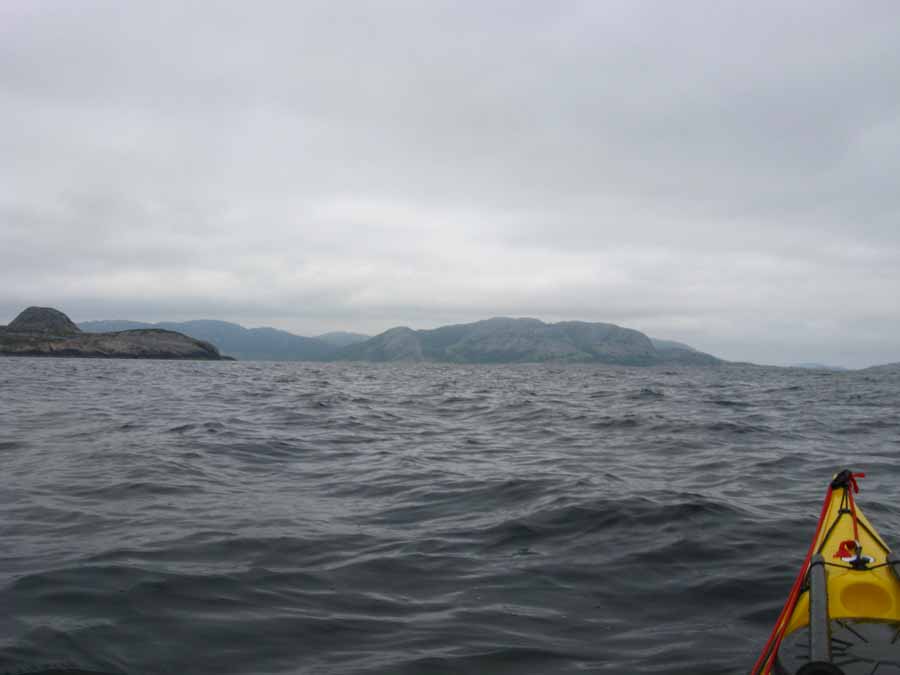
I eventually set off around 1300. The rain had stopped but only momentarily and there was some mist around. Initially I had to paddle across the open Bjugnfjord. It was very calm in the rain and I could see porpoises surfacing all over the place. There were a lot of skerries and reefs about. The Hurtigruten ferry went past going north but I knew no ships would stray in here.

There was a lot of long “spaghetti” weed about. I had noticed it firstly in Troms area. It grows from the bottom in long strands up to 10 metres long with a good few metres lying on the surface. It is buoyant and occasionally I would see some stands of this weed in deeper waters having lifted the small stone it was still attached to off the sea floor. It would then drift to eventually establish another colony if conditions were suitable. I don’t know if this weed is becoming a widespread problem and can’t remember it from 20 years ago anywhere. It was a nuisance to paddle through.
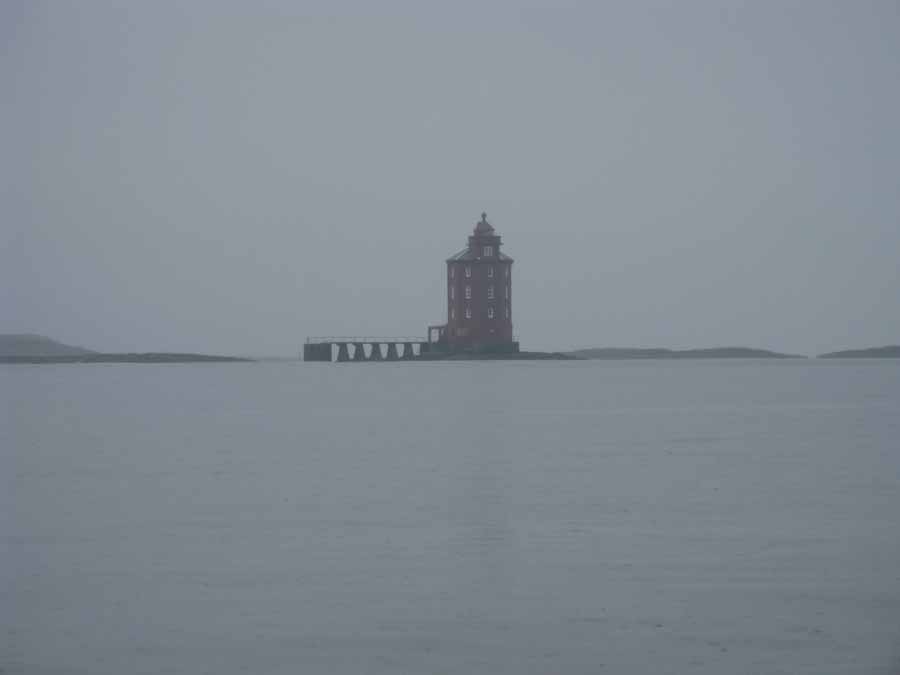
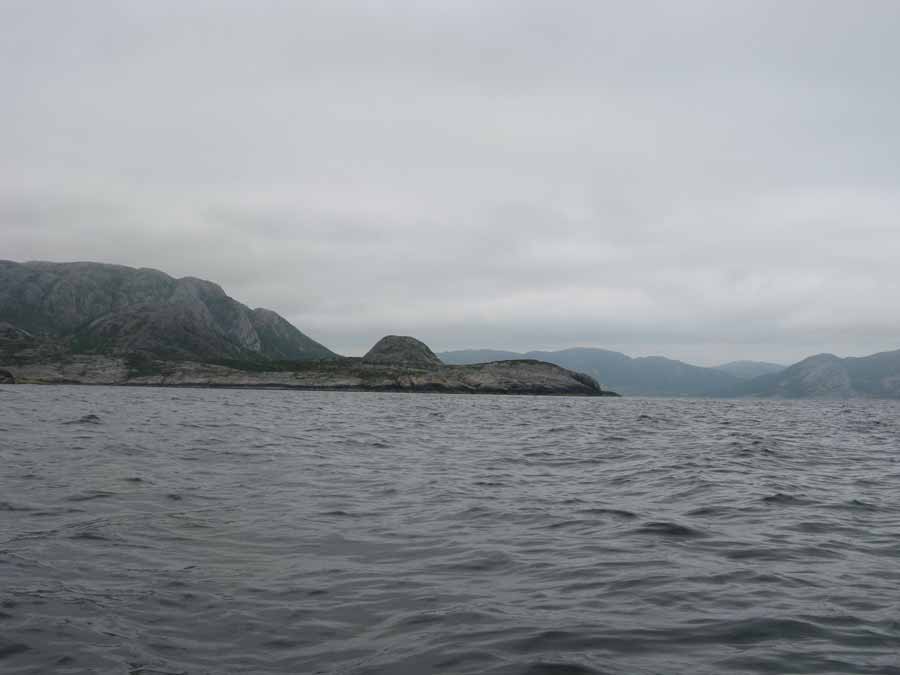
Day 201.1 The lighthouse in the skerries of the coast in Bjugnfjord  seen through the pouring rainI reached the far side and then continued south along the coast in the pouring rain. The wind was slowly starting to increase. I passed a very picturesque lighthouse which was on a skerry among other skerries. It seemed to have the keeper’s cottage with the 4 storey tower. I took a picture risking the non waterproof camera in the downpour.

Soon I got to Trondheimsfjord. It was only some 5 km wide but I suspected it was busy with ships and in these conditions with poor visibility it was not ideal to cross. I reckoned it would be only about half an hour I was exposed. I paused then started to blast over. There were remarkably few ships and one fast ferry and I crossed without problem.

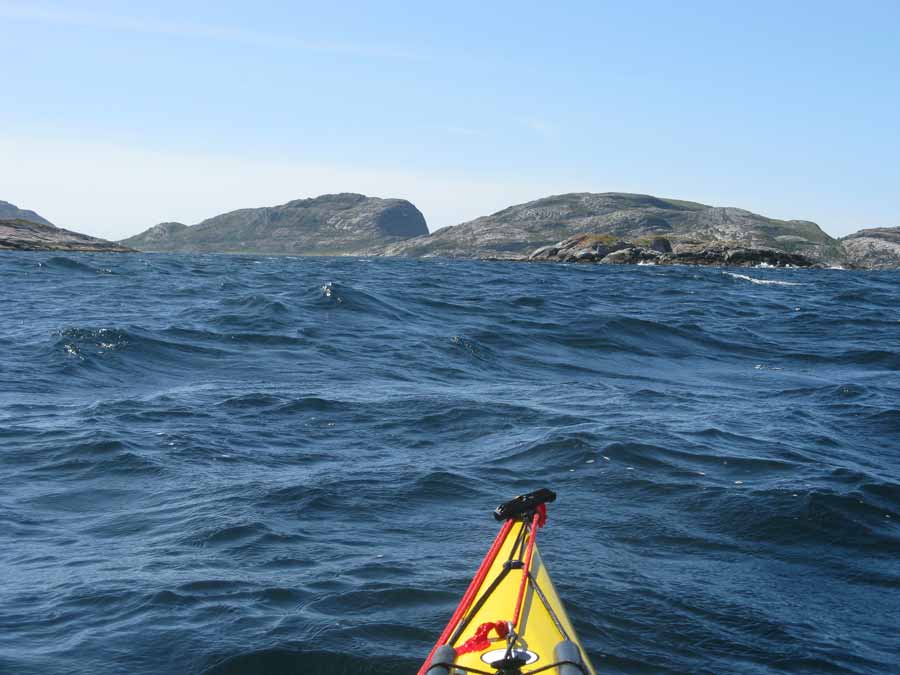
There were some remarkable currents in this crossing however. The wind was now a force three and some of the areas were calm and others contained metre high breaking waves. The tide should have been in the final stages of ebbing. The water was very warm to touch as it flowed out of the fjord.

However the frequent waves washing over the deck and rain meant the cockpit was getting water in it through the neoprene spraydeck and I was getting soaked. By the time I got to Agdenes on the other side the wind was westerly and the tide was against me. I started paddling west but was making 3 km an hour. It was hard work for little gain; I was almost wet through and decided to camp.

I went into Agdenes for some 2 km to a campsite. It was only a collection of static caravans with tacky wooden porches attached to them and some decking around this porch. It was nor for me and I would have felt silly camping here so returned a km to the small boat marina.

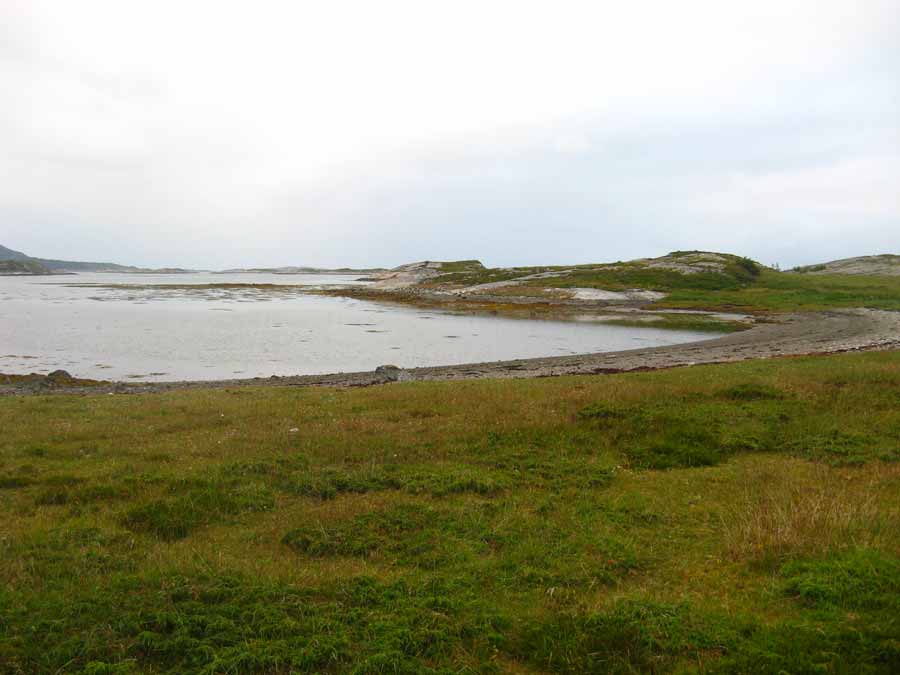
At the marina there was some decking and not wanting to camp among metre high wet grass put the tent up on the decking. The rain continued to lash down as I prepared. By the time it was up and I was in everything was damp. I cooked supper and got into my sleeping bag after sponging as much of the film of water on the groundsheet from the morning’s packing as possible.

It was a miserable day. I was soaked and cold at the end of it. Tomorrow I would dig out the drysuit again which I was saving, until I get a new spraydeck and paddling cagoule. I still had about 100km to go until to meet Colin and Karen at Magnillen in two days so hoped tomorrow would be better.
Day 200. Tarnes in Afjord to Dypfest in Bjugn

Sunday, July 19th, 2009

Distance 33km | Time 9hrs | Ascent 0m | Descent 0m

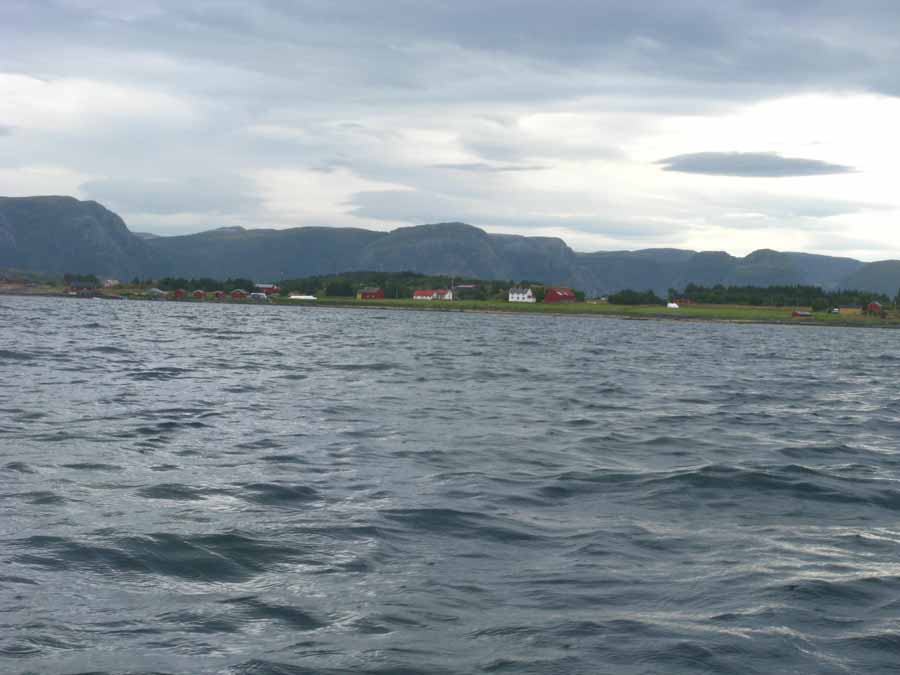
Day 200.1 The small lush island of Lauvoy in the foreground and the mountains between Frohavet and Stjornfjord behindDue to the late finish and long day yesterday I slept late until about 0900 and then did not get going until 1130. It was a somewhat overcast day but it was virtually still and calm. I made my way down more lovely beaches until I reached the end of the flat peninsula. There was a graveyard here it seemed with a small white wooden chapel.

Just beyond the south west of the peninsula was the island of Lauvoy. It looked prosperous with a lot of arable land and numerous large farmhouses. There was a smell of silage coming of the island in the breeze. The breeze was south easterly and coming off the land and it was surprisingly warm. Central Scandinavia had been basking in the sun for weeks now and the land was heating the air.

To the south was a dark range of mountains rising above the coastal fringe. These mountains separated the coast from the parallel Stjornfjord. They were rugged and knobbly but too rounded and short to be alpine at around only 400 metres.

As I paddled over to Lysoysund I came across an active group of terns feeding. They were diving into the water head first with almost the same commitment as a gannet. Frequently I saw them come up with a small fish. The breeze was ruffling the surface of the water and it was overcast and I could not understand how the terns could still see these small 5 cm fish through the surface and some half metre of water.

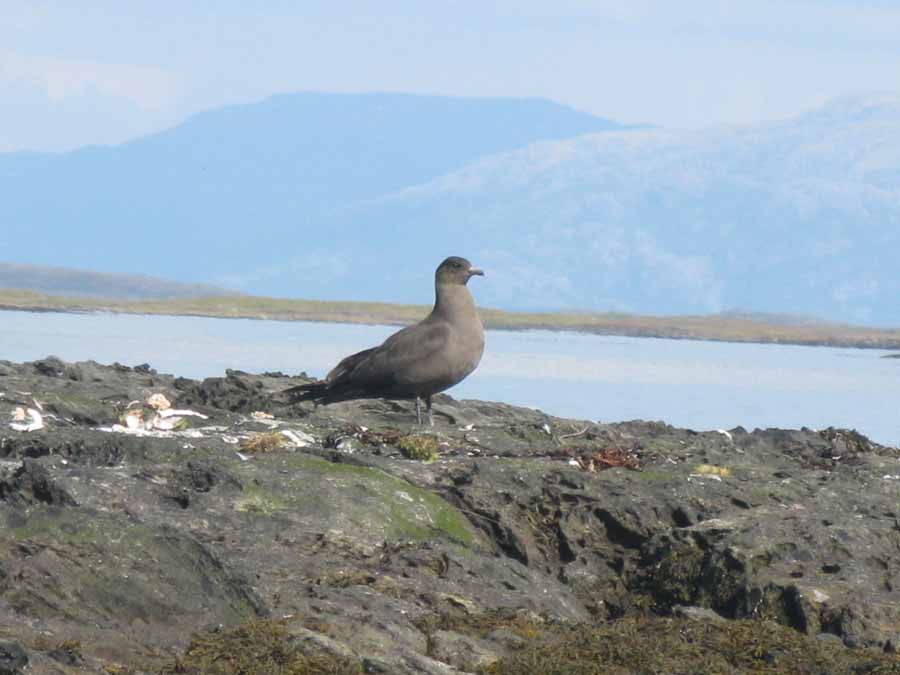
Day 200.2 A skua is a fantastic acrobat but a thiefThere were also a number of Arctic Skuas around. These larger dark birds do not hunt themselves but obtain their food by attacking and harassing other birds who have just caught food and then bully them until they drop it of disgorge it. Their Latin name of Stercorarius parasiticus shows their thieving nature. It is an unpleasant bird whose only redeeming feature is that they are superb fliers and accomplished acrobats outwitting the tern or kittiwake they are pursuing.

Arctic Skua are not as menacing as their larger cousins the Great Skua, Stercorarius skua, which is a fearless predator and will also bully even gannets to surrender their catch, and will kill numerous puffins and other birds often just plucking out the tastiest morsel like the liver and wasting the rest. Very surprisingly, I have seen very few Great Skua on this trip so far and they don’t seem to be that established in Norway. A fact the numerous puffins are no doubt grateful for.

Before I reached Lysoysund I passed a Marine Harvest fish farm. It was by far the biggest operation I had seen yet with about 20 heavily stocked square cages all abutting each other in two rows of 10. The feeding tubes were continually blowing pellets to feed the teeming cages which were dense with large writhing and jumping salmon.

Lysoysund was an eyesore. At the east end of the channel was a semi derelict herring oil factory. Here the remains of processed fish and by products were pressed and boiled to extract the remaining oil for animal feed and fertilizer. The factory looked as disgusting as it sounds. It’s great hulking, rusting buildings were on the cards for demolition and then west end of the town would become more pleasant on its own.

I felt weak and tired so stopped here for a meal in a café. Had I seen the chef or noticed the rest of the clientele before I ordered I would have moved on. The chef was an ugly brute with rolls of fat on the back of his neck wearing cloths covered in last week’s tomato sauce. It was only about 1600 but 15 odd customers were the towns wasters who seemed to be staving off last night’s hangover with beer, roll ups and subdued small chat. They were all 40 somethings and too fat to work and when they last did it was probably in the herring oil factory a decade ago. I could easily have been in Britain and did not feel like Norway at all.

Full of grease I left the town and continued west down the sound out in to the countryside again. I had to go round the outside of the Vallersundhaloya peninsula, connected to the mainland with the smallest isthmus, but an isthmus which forced me into the Frohavet, sometimes an exposed sea and coast.

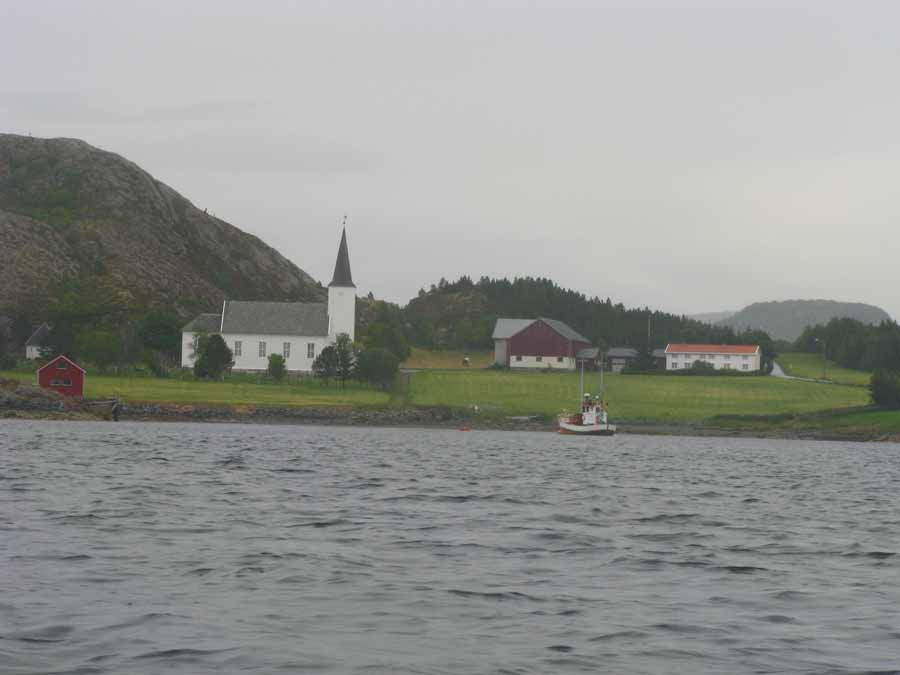
Day 200.3 The church at Jossund and the neighbouring farm is typical Trondelag sceneryI initially paddled past Jossund with its beautiful farms and church and then past a number of small fishing hamlets and marina full of leisure boats. This part of the coast was sheltered from the Frohavet by the islands of Skjoroya and Valsoya. The latter island had a small old iron suspension bridge to it over the narrow sound carrying the single track road.

Towards the west end of this larger peninsula past Haldorhamn the coast was more exposed with some low skerries to protect the shore against the ocean swell. Far on the horizon to the north west was the last frontier against the Atlantic which was the low lying archipelago of the Froan group of islands.

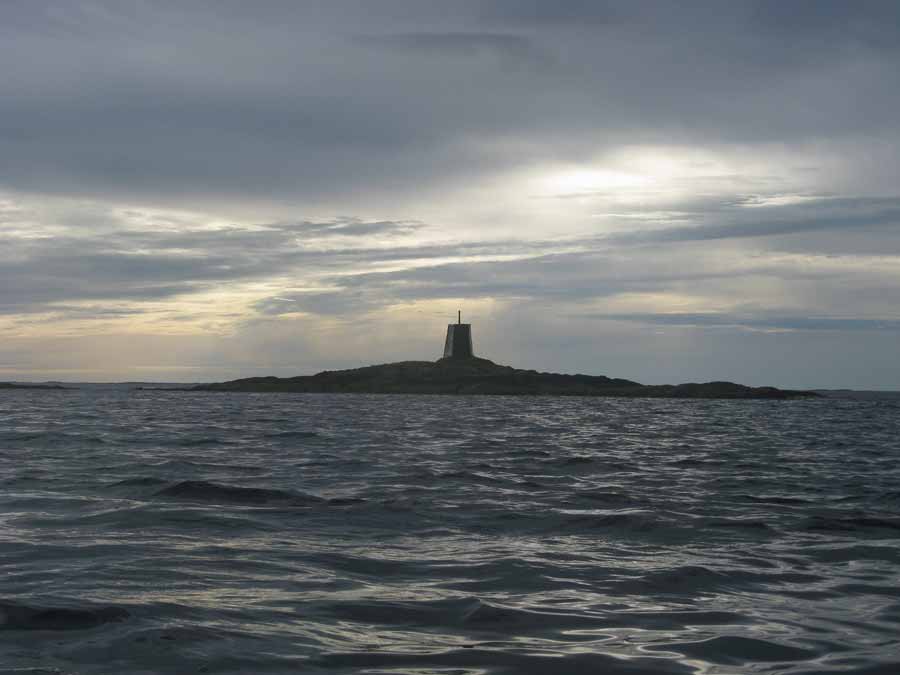
Day 200.4 The massive stone cairns along the coast were landmarks to sailors before light beacons appearedSome of the skerries I paddled past had massive wardens built on them. These stone and concrete structures were large and visible from afar as landmarks. They must have been difficult and taxing to build as some were perhaps 4 metres high and voluminous. They would have been landmarks before more modern light beacons can into use.

Right at the west end of the peninsula were 6 huge wind turbines. I paddled very close to them as they were situated on the shoreline. They were enormous at close quarters and must have been well over 100 metres high. They were much quieter than I was led to believe, but still unsightly.

It was getting on now and was perhaps 2100 and I needed somewhere to camp. I could not see a beach here so continued south across Valsfjorden to Dypfest. This again was a rocky coast with no inviting sandy coves to land at. I paddled past the rocky shoreline to the end. It was now 2200 when I reached the tip. I did not want to cross the next fjord and was anxious about finding a place.

Suddenly right on the tip there was a small beach and flat grassy area beside an old house which looked empty and unloved. It was an suitable place so I landed here and set up the tent. It was not a moment too soon. The rain which had been threatening all day finally arrived. I was too tired to write so went to bed soon after listening to the rain pelting heavily onto the tent. The thin layer of ripstop nylon kept me dry all night despite nearly 20mm of rain.

It was an OK day but not memorable as anything other than my two hundredth day on this Norwegian Odyssey. The scenery was not the most exciting and the paddling was tired and labored. Lysoysund, and especially the café left a poor impression, but some of the cultural landscape outside Vallersundhaloya peninsula was quite charming; until the wind turbines.

Day 199. Smavaeret in Flatanger to Tarnes in Afjord

Saturday, July 18th, 2009

Distance 67km | Time 12hrs | Ascent 0m | Descent 0m

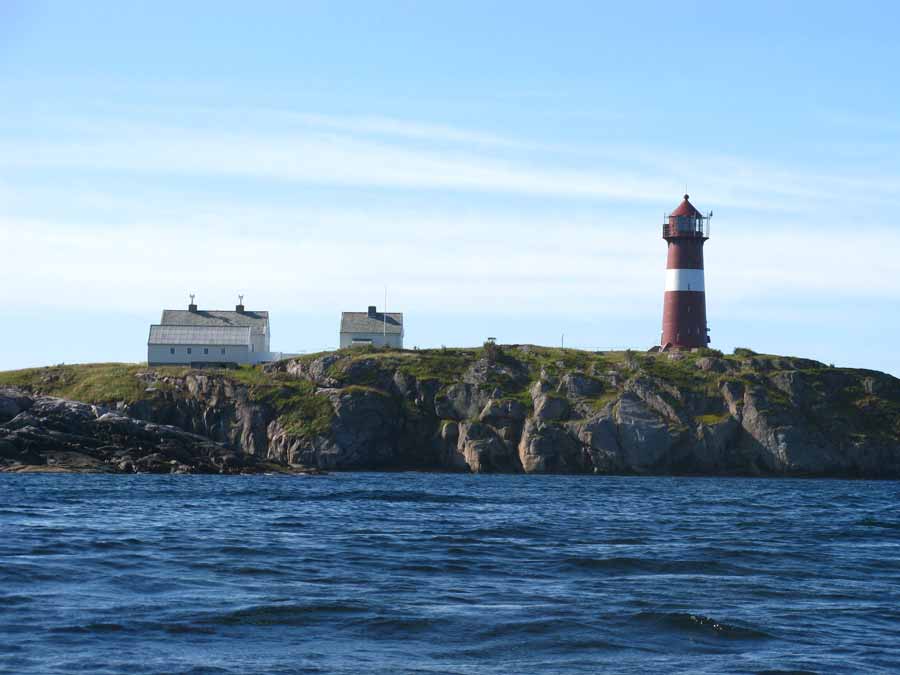
Day 199.1 The Buholmrasa Fyr lighthouse on the exposed Frohavet coastIt was a beautiful still morning when I woke around 0630. I got up soon afterwards and had a packet of biscuits for breakfast and then packed up the kayak. It was on the floating jetty and I slid it of the wood into the water and pushed off at 0830.

There was an increasingly strong north east wind developing as I paddled of out of the small harbour and into the ocean. This wind was a good force three and it seemed to be on the up. It blew me down the flattish coast quite quickly to Buholmrasa Fyr lighthouse some 5 km away. It was a classic Norwegian lighthouse with a couple of white keeper’s cottages.

I then veered south and headed inside the two Rauoya islands. Again with the force four wind now still behind me I made good time. The waves were quite small as there was not the fetch for them to build up. A ship suddenly appeared round a headland north of Hovika. I was surprised such a big boat was using these channels so near the coast. I assumed it would continue north from the headland out into the open ocean. Suddenly it changed it course and was coming straight for me. I must have been on a inside shipping lane. I veered northwards and it passed me with a good 300 metres to spare. I could see men on the ship’s bridge looking my way. It was not really a close call.

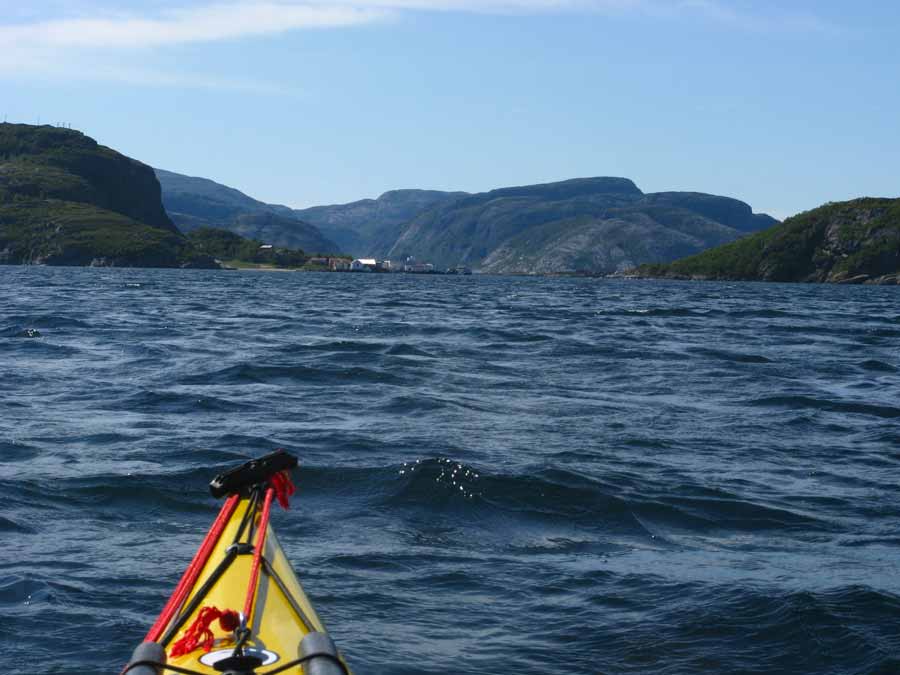
Day 199.2 Going down the sound to Hovika bay and the town of SandviksbergetI soon reached the same headland where the ship appeared from and paddled into a basin with the town of Sandviksberget at the south end by some narrows. This seemed to be quite an industrial little place with a ship unloading and a couple of what looked like concrete foundries. There was also a ships yard here. The wind was still a force four and I had the tide behind me also, so I was cruising along at around 8 km per hour.

After the narrows at Sandviksberget there was another basin between the mainland and a couple of islands. Here the wind increased to a force five and the waves were getting larger and whiter. I caught a couple of the larger ones and surfed them. At one stage I managed 15 km per hour down the front of a wave. The landscape here was quite dull though with rounded crags and sparse vegetation. It was mostly grey ice scoured rock.

Despite the choppy sea there were plenty of German fishermen out in small boats with about 40 horse power outboards. I could tell they were German because they had 3 people per boat with 3-5 rods each. They were also mostly standing up fishing. I am sure that on a day like today the coastguard gets a few calls when the outboards won’t start and people drift in the strong winds towards rocky islands or out to sea.

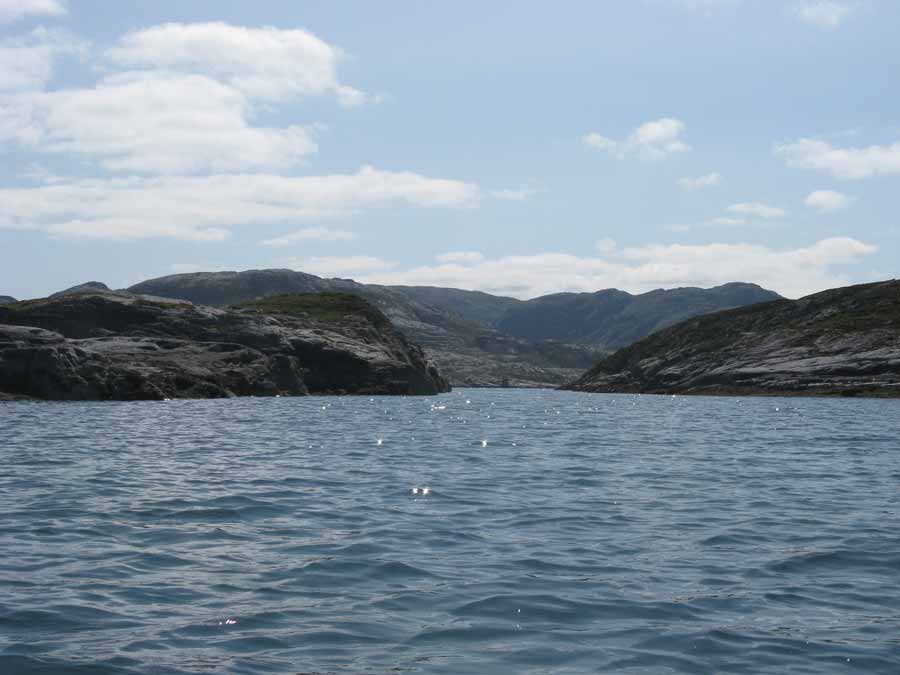
Day 199.3 Approaching the narrows between the mainland on the left and the larger island of Boroya in the centre backgroundWhen I reached Boroya island there was another narrow passage between the mainland and this island. The wind was really funneling through here and was a good force five. The waves were small and I got blown along quickly to Brandsfjord.

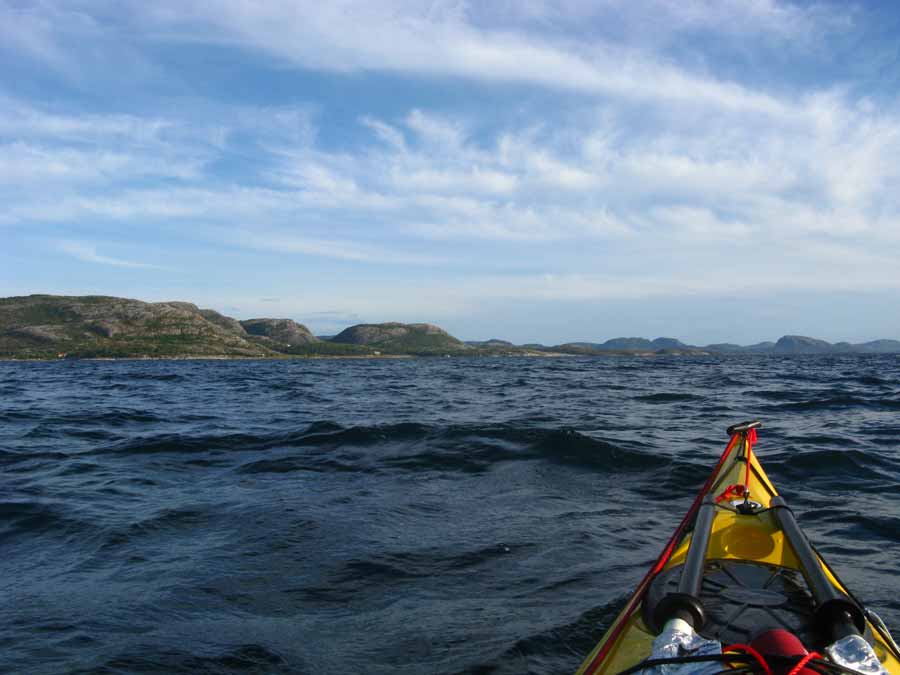
I had to cross Brandsfjord to the headland on the west of it and the wind was now approaching a force six with larger waves. I decided it would be OK and went round the outside of an island in its mouth to save time. The kayak was extraordinarily stable but in a large following sea waves tended to wash over the back of it.

I was surprised to see some 10 odd larger fishing boats; some over 40 foots stationary in Brandsfjord with many people fishing off each one. They seemed to be mostly Norwegian as they had hand lines. I don’t know why Brandsfjord was so popular.

After I reached the headland to the west of Brandsfjord and was growing confidence in this force six following sea I had two islands to pass. I could not see if they were in fact islands, and if I assumed they were and I was wrong and there was a isthmus or causeway it would have been hard paddling out again against the wind so again I decided to go round the outside.

I then crossed straight over Skjorafjord for 5 km to the final headland. The wind started to diminish here, but the waves were still large and some were nearly two metres. My feet were working hard to keep the rudder moving so I would hold a straight line and not broach on the waves and lose momentum.

With this last headland out of the way I now left the more exposed waters and entered a sound between this headland and the island of Stokkoy. I was hungry so ate while being blown along and using the rudder to keep the kayak in line with the wind. I made nearly two km while relaxing and eating. At the south end of this sound, called Stokken, the water opened out into a large basin full of steep rocky islands. I turned west before I reached them to reach the town of Stokksund.

Stokksund was also surprisingly industrial with a few larger ships tied up unloading or in a yard for maintenance. Like Sandviksberget earlier in the day I was very surprised to see such industry along this otherwise empty and wild coast with many leisure cabins hidden in various bays. There was a bridge here connecting the Stokkoy island to the mainland.

I had made good time and distance when I got to the bridge and now the wind seemed to be against me. I thought about calling it a day here as I clawed my way under the bridge. There was nowhere to camp however so continued south west when suddenly the wind was behind me again.

Day 199.4 Heading south west from Stokksund looking for a campspot on the peninsula on the leftIt was now a fine evening and the wind was down to a steady force four and behind me again. I decided to paddle on passing a few headlands and bays on my south covered in the small neat farms one sees all over coastal Norway. I also passed a few islands in this stretch of water which had a lot of geese on them. I kept an eye out for somewhere to camp all the time but did not see anywhere really good for an hour.

The beach I was looking for eventually appeared near the end of this convoluted peninsula I was following. It appeared just before the end and I was already thinking about crossing to Lauvoy island. It was a beautiful sandy beach with a few cabins and a tidy farm around it.

It was 2030 and I was quite wet and getting cold. My new spraydeck was much better but I could feel water coming through the porous neoprene onto the top of my legs. The fleece leggings were soaked and there was about 3 cm of water in the boat. Also my old faithful paddling cagoule had a few holes in it and the spray from the waves and wind had penetrated it and soaked my fleece shirt. So the beach was quite welcome.

I charged the kayak onto the sand and went to look for a campsite. There was one just above the sand in a field of cut grass with some tall vegetation as protection. It was perfect. Furthermore there was a terrace with a table and chairs nearby. After supper in the tent I went to the terrace to write until midnight. By then the wind had almost vanished and there was a glorious sunset. I felt I was still at sea lurching back and forth all evening as I wrote.

It had been a fast day. The land just seemed to wiz by and I had little opportunity to enjoy it. However I had made a good distance very easily and some of the windy wavy areas were quite exhilarating, especially when I caught a wave and managed a short surf.

Day 198. Lauvoy to Smavaeret in Flatanger

Friday, July 17th, 2009

Distance 21km | Time 5hrs | Ascent 0m | Descent 0m

Day 198.1 Approaching the maze of isalnds south of Halmoya islandI was lazy in the morning and although I woke at 0700 I did not get up until 0830. The previous breakfast staple of muesli and powdered milk was now abandoned in favour of a packet of oat rich biscuits covered in chocolate. Much easier and no washing up.

I leisurely packed the kayak up and did not set off until 1100. Disgraceful really after an early night. My arms felt heavy as they often do for the first hour as I left the lovely Lauvoy and crossed over to Kvernoya and then round the south east tip to enter a sound. Across the sound on the south side was the guesthouse at Einvika. It looked OK but one can’t tell from the map and it might have been absent even.

After passing through the sound I came to the west end of it and entered another archipelago of small and large islands. On the larger island to the north, Halmoya, was a very well kept and large farm with a beautiful old white building. Generations of hard work had gone into building that up.

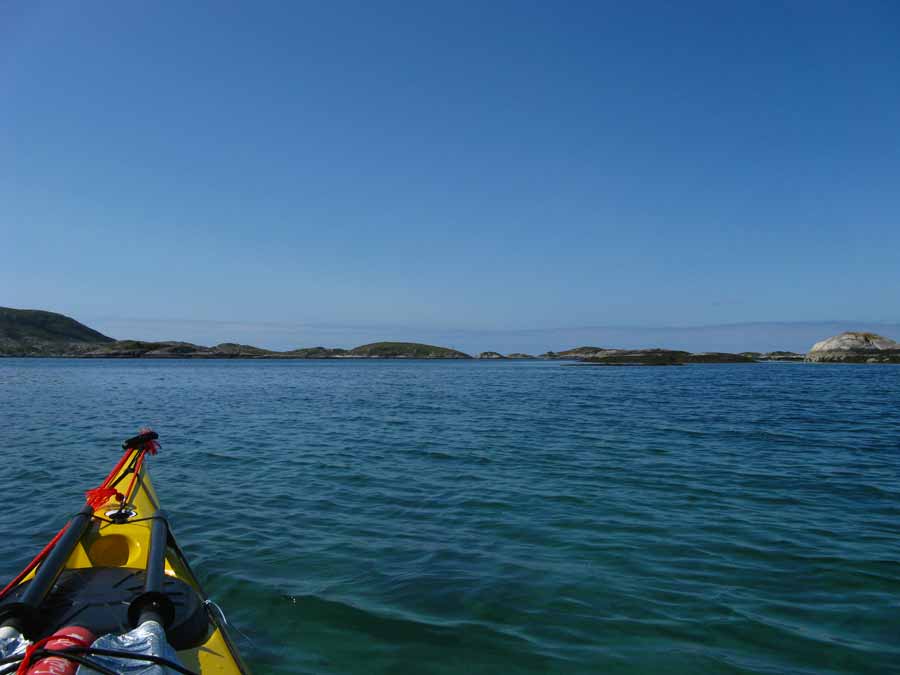
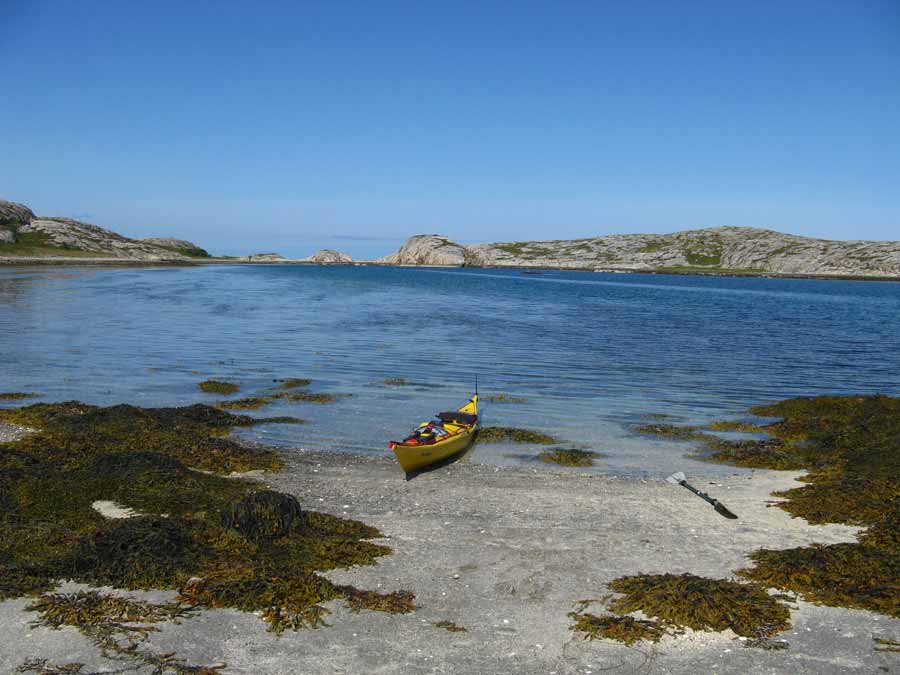
Day 198.2 One of the deepest channels in the maze of islands south of HalmoyaAgain I entered an area where it was difficult to navigate with the road map and GPS combination. There were some 20 larger islands surrounded by at least 100 smaller islets and skerries. I just aimed south west and enjoyed exploring. I never knew what was round the next corner. Sometimes it was a sandy channel with beaches on each side, sometimes it was a deep channel with darks waters and sometimes it was weed covered shallows which had dried in this low tide and I had to paddle on to the next. This was the type of paddling I liked most rather than having the predictability of watching the distant headland getting imperceptibly getting closer.

The excitable oyster catchers were numerous in these islands. I spotted a couple of them with their single chick. These chicks were about half the size of the parents too now and the considerable work the parents had put into rearing the chick, feigning injury and warding off predators had almost paid off, as the chick was not so vulnerable now and would be flying in a month probably

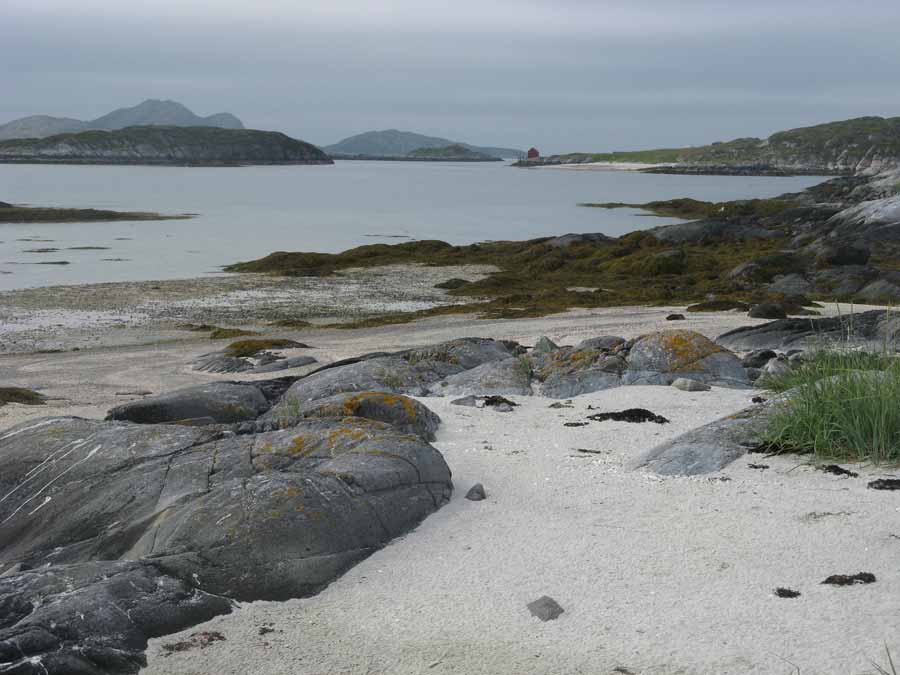
Day 198.3 Lunch beaak on the island of Kvaloya looking northI eventually reached the west side of this maze at Kvaloya and although I had only done some 13 km in three hours stopped for lunch on a beach. It was pretty easy to find a beach when I wanted since Tromso about a month ago. Kvaloya had a few on the south side and I didn’t see the best until I left the small on I was on.

I now paddled along the coast which was more open to the west and the potential bad weather. Today was however turning into a stunner and it was almost getting too hot and it was completely still.

I crossed the narrow mouth of Jossundfjord and reached the headland on the other side where Hasvag lay. It was in a large bay sheltered from the west sea by a number of larger islands which formed a basin. Within this basin was another deep sheltered bay where the small village of Hasvag lay. The map indicated it had a campsite and I thought about it but I could not see it as I paddled past so it must have closed or never existed. Generally the campsites are busy noisy places full of camper vans and not the sort of place I thrive.

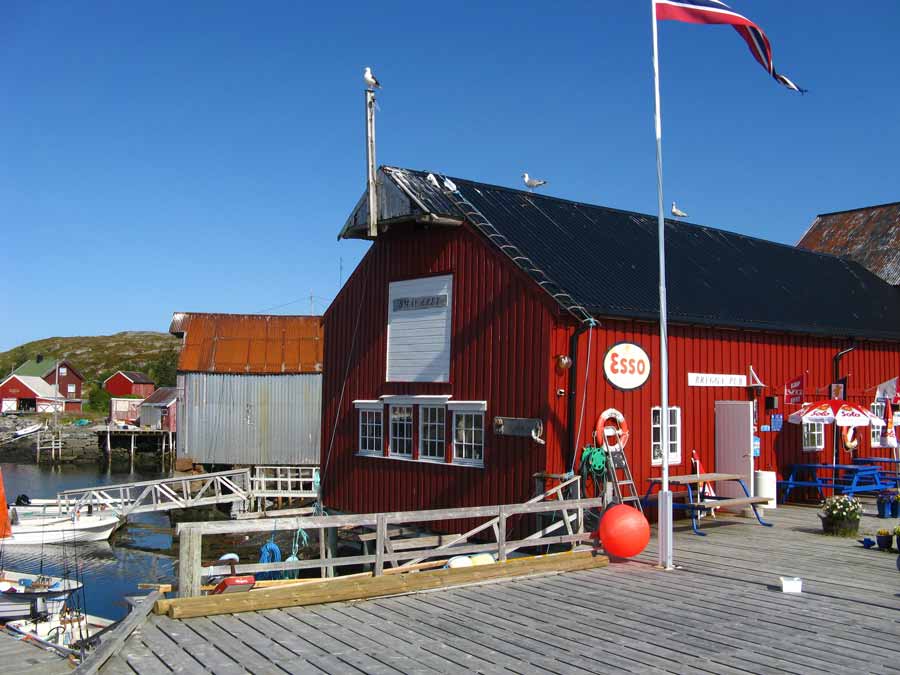
Day 198.4 The pub and shop at the small marina at the quiet hamlet of SmavaerI paddled on for another couple of km until I came to Smavaer on the end of the peninsula. This was a hamlet of about 15 houses, a small marina, a simple shop and a pub. I asked the shop owners who had the pub also if I could camp nearby and write in the pub. No problem she said. She even showed me and cleaned a small shed to write in if I preferred. I thought the empty pub would be better.

I had the tent up, the kayak on the floating jetty and was in the pub writing by 1630. I ordered a meal here and it had to be Baccaloa, a Spanish dish from Galicia made from Norwegian fish. The main ingredient is Klippfisk, which is salted cod which has been dried in the summer sun on rocks.

The marina here seemed to be full of some 5 sedentary cabin cruisers the owners of which seemed to spend the whole afternoon on deck sunbathing. They stayed in the evening also. I assume that they will spend the entire summer holiday going from one marina to another doing this. It is quite remarkable that this country I spent the winter skiing up can now offer this almost Mediterranean weather everyone has enjoyed in the last month.

The writing went well and by 2130, after some 5 hours, I had the three days done and uploaded with all the pictures. This seems to be the most efficient way to get it out of the way rather than doing it day to day. I suppose it all depends on the weather and how my arms feel as to what happens in the future.

After writing the shop owner let me buy a few supplies and I had another meal in the pub which still remained empty before hopefully crashing out early, restocked and up to date. Hopefully I will be ready for a bigger day tomorrow.

It had been a short easy day. Perhaps I had wasted some excellent weather and will come to regret it later but I also had to clear the decks of writing and relax a bit.

Day 197. Royrvik to Lauvoy in Flatanger

Thursday, July 16th, 2009

Distance 43km | Time 10hrs | Ascent 0m | Descent 0m

Day 197.1 A break on on of the cluster of islands in ArnoyfjordI woke early and intended to do the blog but the weather was calm, but overcast with a bit of occasional drizzle. These were good conditions to cross Folda. Folda was an open stretch of water some 10km across which was exposed to the sea. It had something of a reputation as being exposed and potentially dangerous so I was keen to get it behind me.

I set off eventually at 1000 and initially followed the coast to Abelvaer. First I passed a beautiful large Lutheran church at Naeroy just south of my camp place. It must have been of some importance in the area. Then I entered an archipelago of islands before Abelvaer.

I thought I was finished with idyllic islands now I had left Helgelandskyst but these were as sandy and grassy to rival anything Helgelandskyst had. There were numerous channels between them, some very shallow in the low tide but luckily I did not encounter any waterless stretches. I was nearly two hours exploring these enchanting islands in Arnoyfjorden north of Abelvaer.

I stopped on one sandy island which was a tern colony. I went ashore to have a look at the chicks which I felt sure must have hatched now. I could not believe that they still had not hatched. I was beginning to suspect that some fertility disaster had affected the terns up here and they were guarding useless eggs.

As I approached Abelvaer I saw a large raft of Eider ducks. There was about 5 mothers and at least 20 ducklings. They had grown considerably in the last weeks and were now about half the size of the adults. Abelvaer seemed much bigger than it should have been. There were a couple of huge semi derelict fish processing plants or warehouses from days when the village was thriving. Now the main industry seemed to be a medium sized boat yard with a 100 ton fish farm barge in it being overhauled.

Day 197.2 The bleak lasndscape on Joa island across FoldaFrom Abelvaer I was straight into Folda. It was calm and gentle on this overcast day so I took a bearing for a peninsula some 10 km over on the south side. The crossing was easy and perhaps even a tad boring watching the land on the other side approach very, very slowly. I could see how it was exposed to the west weather but this coast line has enjoyed north easterly winds for nearly a month now and there was no swell at all.

I bypassed the grey rocky island of Joa and reached Otteroy at its northern tip. I did not stop here but continued right over the relatively narrow Namsfjord to the peninsula on the west of it. There was the odd bit of drizzle. I saw a couple of porpoises again just on their own rather than in a large group. They seemed to be just a metre long if that.

Day 197.3 Heading across Folda to Otteroy with Joa on the leftThe coast had been quite dull with grey land to the east and open ocean with the odd distant flat island to the west. All that changed as I passed the 60 year old defenses which was German gun emplacements on the end of the peninsula to the west of Namsfjord. I was now into a mass of islands and skerries again. I weaved my way between them as it was impossible to go in a straight line.

It was getting on and I wanted to camp or reach a camping place early to write so started looking for a place to camp at 1600. Nothing grabbed me in this grey landscape and I started to make for a possible guesthouse in 10 km at Einvika where I could get a table and chair.

I paddled to the north of Feoy island and entered a deep basin hemmed in by Feoy to the east and a steep island of red rocks to the west called Havstienen. Havstienen had some great geological features on display with some very clear folding of rocks. As I paddled past it admiring these red and black bands folded I noticed some of the rustic sheep grazing on some of the very steep slopes.

I paddled past the north tip of Lauvoy and looked down its east side to see the white spire of a church and several farms gathered in a hamlet. It must have been an important centre once also. However I soon lost sight of it as I paddled round the north tip and started down the west side.

Day 197.4 The nice campsite on the west side of Lauvoy islandBy now I was heading for the potential guesthouse in 5 km when I passed a gentle bay of sand and flat grazed green grass above that. It looked too good to pass and it was already 2000. I pulled up and it looked perfect so I began to set up camp.

There were about 30 sheep grazing here obviously from the farms on the other side of this relatively small island. These sheep were much more cared for and looked quite dapper compared to the semi feral ones I usually saw on the islands. They were also larger. They stood looking at me for 5 minutes and then suddenly one ran towards me and the whole herd charged at me stopping some 5 metres away. These sheep were cared for all winter in barns and were hand fed salt and snacks from the family. They were used to human contact and were racing to see if I had a snack.

I set up the tent quickly and soon was organized. The drizzle was on again and I felt quite cozy in the tent. I ate first and then I made the mattress into a chair got the laptop on my lap and started to write. After 5 minutes I could not stay awake. My brain rebelled against the thought of writing for a few of hours. It was only 2230 but I packed it all up and crashed out.

It had been good day. The paddling was easy and the islands north of Abelvaer were enchanting. The crossing over Folda was easy to the extent it was dull and then the islands in the evening were interesting again. I had a nice camp but was disappointed I could not bring myself to write. I must do that tomorrow otherwise it will get out of hand.